What is Fiberglass Insulation?
Fiberglass is a type of fiber primarily composed of glass that is used in a wide variety of applications and is predominantly employed as a residential and commercial thermal insulator. Currently, manufacturers produce medium- and high-density fiberglass batt insulation products that have a slightly higher R-value than standard batts, according to the U.S. Department of Energy. Fiberglass can be placed in unfinished walls, floors, and ceilings. It is fitted between studs, joists, and beams.
How does Fiberglass Insulation work?
As an insulator, it slows the spread of heat, cold, and sound in structures, cars, and aircraft. By trapping pockets of air, it keeps rooms warm in the winter and cool in the summer, and thereby serves as a convenient method to increase energy efficiency.
What is R-Value?
R-value measures how well building insulation can prevent the flow of heat into and out of the home. Higher R-value means greater insulation performance, and thus more savings on your next heating and cooling bill. This guide will teach you everything you need to know about insulation R-values so you can better insulate your home.
Insulation ratings are measured in R-values per inch of thickness. An R-value tells you how well a type of insulation can keep heat from leaving or entering your home. Insulation R-values vary based on the type, thickness, and density of the insulation material. Typically, a higher insulation R rating means better climate control and better energy efficiency for your home. A higher insulation R-value usually means a higher price point as well.
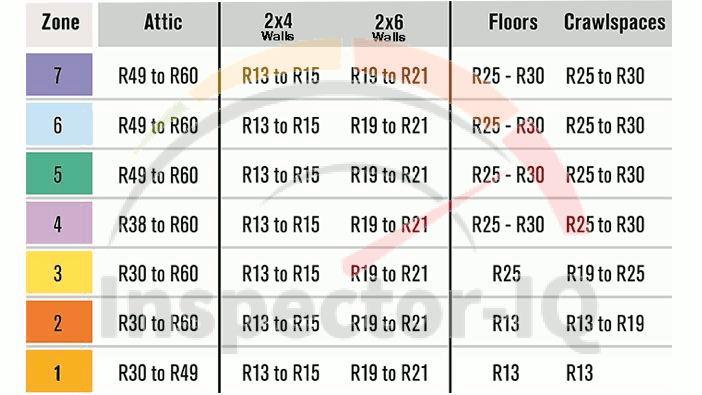
For every type and material of insulation, check the R-value per inch of thickness that the manufacturer has listed. In general, the insulation’s method of installation can give you an idea of how it compares to other types of insulation.
Here are the installation methods from lowest to highest average R-value per inch:
- Blown-in (or loose-fill) insulation
- Insulation blankets (batts and rolls)
- Spray foam insulation
- Foam board insulation
Installing more insulation in your home increases the R-value and the resistance to heat flow. In general, increased insulation thickness will proportionally increase the R-value. However, as the installed thickness increases for loose-fill insulation, the settled density of the product increases due to compression of the insulation under its own weight. Because of this compression, loose-fill insulation R-value does not change proportionately with thickness. To determine how much insulation you need for your climate, consult a local insulation contractor.
Disclaimer: Inspector-IQ takes reasonable efforts to ensure that the contents of its website are accurate. While every effort has been made to ensure the accuracy and completeness of the content of Inspector-IQ.com, no warranty or fitness is provided or implied, and Inspector-IQ, its partners, supporters, employees, or associated organizations shall have neither liability nor responsibility to any person or entity with respect to any loss or damage arising from its use.
Last Updated on 4 years ago