What is Radon gas?
Radon gas is radioactive and forms naturally when uranium, thorium, or radium, which are radioactive metals break down in rocks, soil, and groundwater. People can be exposed to radon primarily from breathing radon in air that comes through cracks and gaps in buildings and homes. Because radon comes naturally from the earth, people are always exposed to it. As a result, we recommend that all homes be tested as part of a home purchase or sale.
Studies performed at the University of Iowa have helped show that radon is the second leading cause of lung cancer and the leading environmental cause of cancer deaths in the United States.
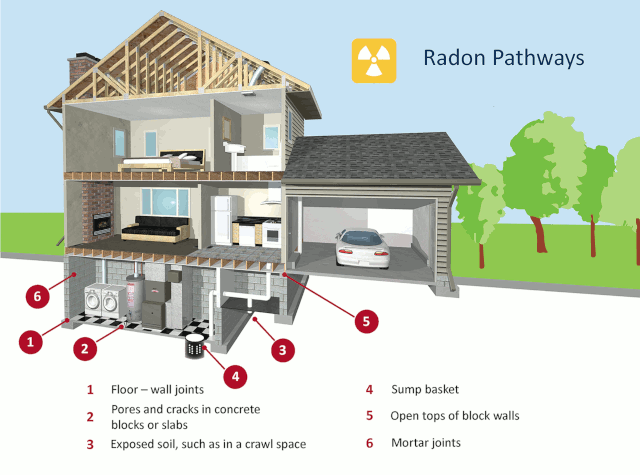
How does Radon gas get into homes?
Radon gas can enter even through small cracks in the foundation or openings in the foundation of homes like sump pumps or spaces around pipes. For some individuals with wells, radon in the well water can enter the home and become airborne during showering or dishwashing. The amount of radon gas from groundwater is generally small compared to the amount of radon that comes from the soil.
See also:
- Radiation Protection Division: Radon – https://www.epa.gov/radiation/radionuclide-basics-radon
- EPA’s Integrated Risk Information System profile on Radon 222 [CASRN 14859-67-7] is located at: https://cfpub.epa.gov/ncea/iris/iris_documents/documents/subst/0275_summary.pdf
- Radioactive Decay
For a complete, up-to-date listing, visit the EPA’s website at: http://www.epa.gov.
| Alabama: (800) 582-1866 | Missouri: (800) 669-7236 |
| Alaska: (800) 478-8324 | Montana: (800) 546-0483 |
| Arizona: (602) 255-4845 x244 | Nebraska: (800) 334-9491 |
| Arkansas: (800) 482-5400 | Nevada: (775) 687-5394 x275 |
| California: (800) 745-7236 | New Hampshire: (800) 852-3345 x4674 |
| Colorado: (800) 846-3986 | New Jersey: (800) 648-0394 |
| Connecticut: (860) 509-7367 | New Mexico: (505) 476-8531 |
| Delaware: (800) 464-4357 | New York: (800) 458-1158 |
| District of Columbia: (202) 535-2999 | North Carolina: (919) 571-4141 |
| Florida: (800) 543-8279 | North Dakota: (800) 252-6325 |
| Georgia: (800) 745-0037 | Ohio: (800) 523-4439 |
| Hawaii: (808) 586-4700 | Oklahoma: (405) 702-5100 |
| Idaho: (800) 445-8647 | Oregon: (503) 731-4014 x664 |
| Illinois: (800) 325-1245 | Pennsylvania: (800) 237-2366 |
| Indiana: (800) 272-9723 | Rhode Island: (401) 222-2438 |
| Iowa: (800) 383-5992 | South Carolina: (800) 768-0362 |
| Kansas: (800) 693-5343 | South Dakota: (800) 438-3367 |
| Kentucky: (502) 564-4856 | Tennessee: (800) 232-1139 |
| Louisiana: (800) 256-2494 | Texas: (800) 572-5548 |
| Maine: (800) 232-0842 | Utah: (800) 458-0145 |
| Maryland: (800) 438-2472 x2086 | Vermont: (800) 439-8550 |
| Massachusetts: (800) RADON-95 | Virginia: (800) 468-0138 |
| Michigan: (800) 723-6642 | Washington: (360) 236-3253 |
| Minnesota: (800) 798-9050 | West Virginia: (800) 922-1255 |
| Mississippi: (800) 626-7739 | Wisconsin: (888) 569-7236 |
| <><><><><><><><><><><><> | Wyoming: (800) 458-5847 |
Disclaimer: Inspector-IQ takes reasonable efforts to ensure that the contents of its website are accurate. While every effort has been made to ensure the accuracy and completeness of the content of Inspector-IQ.com, no warranty or fitness is provided or implied, and Inspector-IQ, its partners, supporters, employees, or associated organizations shall have neither liability nor responsibility to any person or entity with respect to any loss or damage arising from its use.
Last Updated on 2 years ago