Why Are Dedicated Circuits Important?
The National Electrical Code requires dedicated circuits for major electrical appliances such as refrigerators, stoves, washers, dryers, and electric water heaters because they ensure that appliances can operate safely without overloading the home’s electrical system.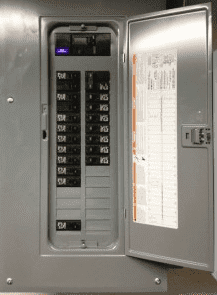
Home inspections are not to be technically exhaustive and as a result, it is not practical to determine if a required dedicated circuit is in fact dedicated. Unfortunately, many homes do not have panels with properly labeled indexes. You should recommend that the panel index be updated and labeled as required by a licensed electrician to promote safety.
What is a dedicated circuit?
Technically what we call a ” dedicated circuit ” is by definition an ” individual branch circuit “. The National Electrical Code defines an individual breach circuit as a branch circuit that supplies only one utilization equipment. Several appliances require a dedicated circuit. Here is a partial list of some appliances that may require a dedicated circuit.
- Air conditioners
- Bathroom heater (including vent-fan heater units)
- Dishwasher
- Dryer
- Electric range, cooktop, or oven
- Electric water heater
- Furnace, Air Handlers and Heat pumps
- Garbage disposal
- Laundry room receptacles (outlets)
- Microwave
- Refrigerator or Freezer
- Sump pump
Preventing Overloads
When more than one appliance is served by a single circuit, there is the potential for these appliances to draw more power than the circuit is designed to handle. The result is a tripped circuit breaker or fuse. This is a fairly common occurrence in kitchens and bathrooms in older homes that were installed at a time when the National Electrical Code did not anticipate such a large number of appliances.
The National Electrical Code requires that any appliance or device dedicated as critical-use be served by its own dedicated circuit to eliminate the chance of another appliance or device tripping the breaker and shutting down that critical fixture. These critical appliances include things like furnaces, water heaters, sump pumps, even refrigerators. If one of these breakers trips and you don’t know it, you could end up with a flooded basement, a freezing house, no hot water, or a refrigerator full of rotten food.
Additional information about AFCI & GFCI can be found here.
Disclaimer: Inspector-IQ takes reasonable efforts to ensure that the contents of its website are accurate. While every effort has been made to ensure the accuracy and completeness of the content of Inspector-IQ.com, no warranty or fitness is provided or implied, and Inspector-IQ, its partners, supporters, employees, or associated organizations shall have neither liability nor responsibility to any person or entity with respect to any loss or damage arising from its use.
Last Updated on 4 years ago